
اترك رسالة
إذا كنت مهتمًا بمنتجاتنا وتريد معرفة المزيد من التفاصيل، فيرجى ترك رسالة هنا، وسنقوم بالرد عليك في أقرب وقت ممكن.
A solar roof hook is a small part with a large job: it carries the rail, the modules and every wind and snow load from the array into the roof structure — without cracking the tile above it. Most hook failures are not dramatic. They show up as a cracked tile after the first hot summer, a rail that sits ten millimetres out of plane, or a fixing that pulls out because the hook was too short for the batten. This guide gives installers and buyers seven checks that separate a hook which lasts 25 years from one that generates call-backs.
Three loads pass through a roof hook. The array presses down through the hook into the rafter as compression. Wind uplift pulls the hook upward, so the fixing has to resist tension. Rail expansion and wind drag push sideways along the roof. The tile is a weather covering, not a structural member, so the hook must bridge over it and land in timber. Every design decision — the bend, the base plate, the rod diameter — exists to move those loads into the rafter without touching the tile.
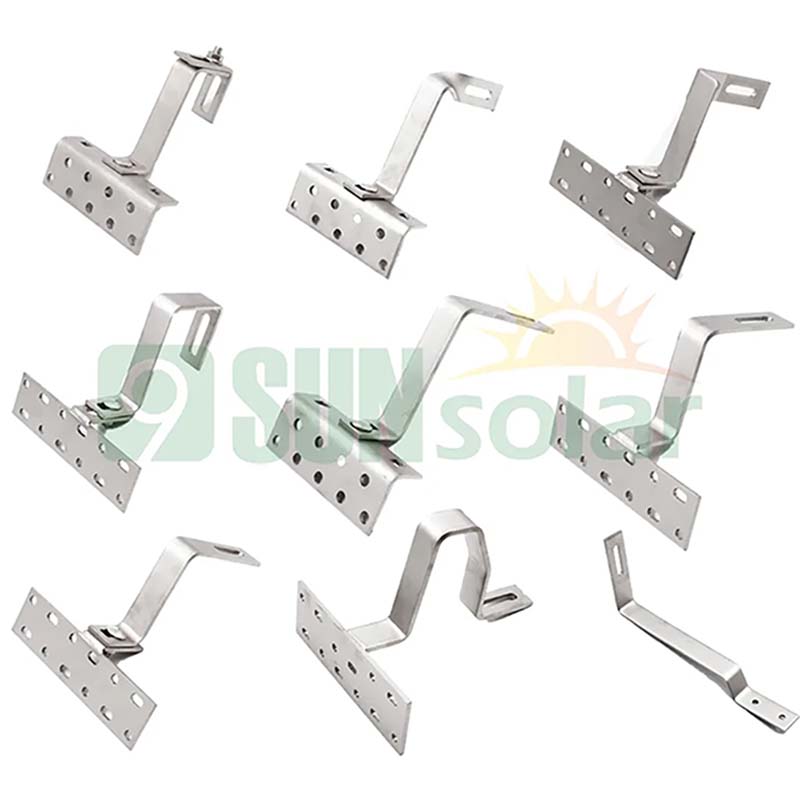
A curved clay tile, a flat concrete tile and an interlocking tile each need a different bend and width. A universal hook that claims to fit everything usually sits on the tile instead of passing over it, which point-loads the tile and cracks it under thermal movement.
For coastal or industrial sites, specify 304 or 316 stainless steel and A2 or A3 fasteners. A painted or thin galvanised finish is easily scratched during installation, and the first rust spot appears in the same season. Ask for the grade in writing rather than accepting “anti-rust” on a label.
The base plate spreads the load over the rafter; the screw must reach that rafter with enough embedment. Give the supplier your rafter size and tile thickness, and ask for the required fixing length — not just the overall hook length.
Adjustment lets the installer level the rail plane over an uneven tile field. Check the range and the locking method: a plain slot with one bolt can slip under vibration unless it is serrated, keyed or has a second fastener.
Ask for the test method, the allowable tension and compression values and the safety factor. A catalogue claim that a hook is “strong” or “high strength” is marketing, not a specification you can design to.
The top of the hook must accept your rail series and clamp hardware without drilling or packing. Mixing brands often leaves a poor fit, a loose rail or a hole that voids the finish warranty.
A good hook lifts the tile as little as possible and includes or accepts a flashing plate that slides under the course above. Sealant alone is not a flashing detail; it dries, cracks and lets water in within a few seasons.
Catalogues list hook height, base plate dimensions, rod diameter and adjustment range. None of these alone tells you whether the hook fits your roof. Match the hook height to tile thickness plus the required standoff, the base plate to the rafter width, and the rod to the rail load. Ask the supplier to confirm the combination against your tile profile and rafter spacing in writing before the order is placed.
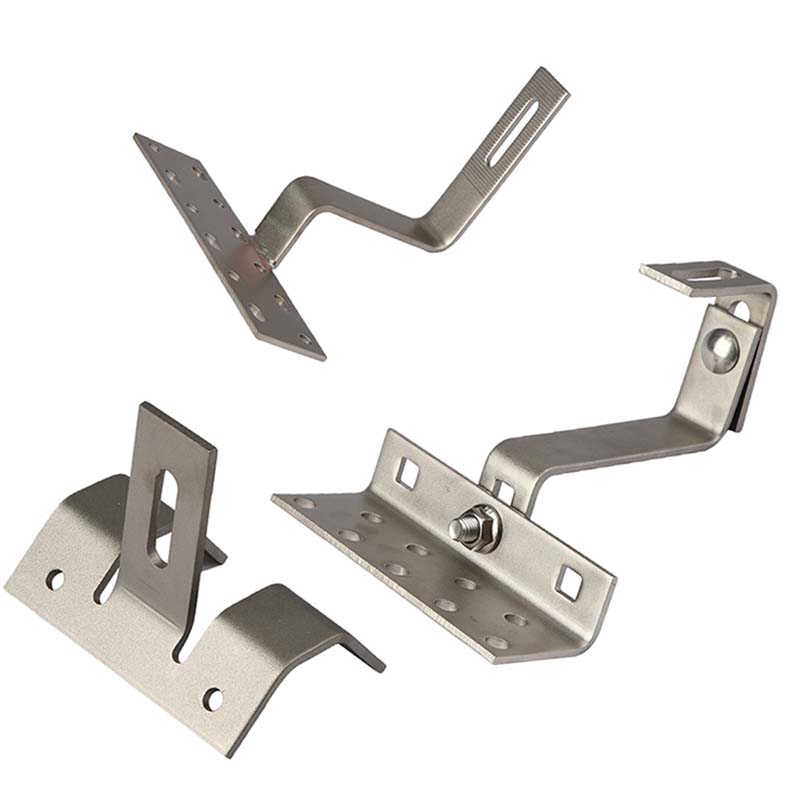
A stainless hook shaped to the tile curve, with adjustable height and a base plate that lands on the rafter. Confirm the bend against your specific clay profile, because tile shapes vary widely between regions and manufacturers.
Not when the tile is lifted minimally and flashed under the course above. Leaks usually come from cut tiles, missing or misplaced flashing, or fixings that miss the rafter and leave a gap.
There is no fixed number per panel. Hook count follows the rail span, the design snow and wind loads and the rafter spacing. The layout drawing should state the hook positions per row, with closer spacing at edges and corners.
9Sunsolar supplies solar roof hooks in stainless steel and aluminium, with fixed and adjustable heights to suit clay, concrete and interlocking tiles. Send us a photo of the tile profile, the rafter spacing, rail type and local wind and snow loads, and our team will confirm the correct hook, fixing length and flashing detail for your project.
If you prefer one matched supply, the same tile roof mounting brackets range combines hooks, rails, clamps and fasteners in a single kit.
اشترك في النشرة الإخبارية لدينا للحصول على معلومات التحديث والترويج والبصيرة.


 دعم شبكة IPv6